Tea
 Jules Ballard
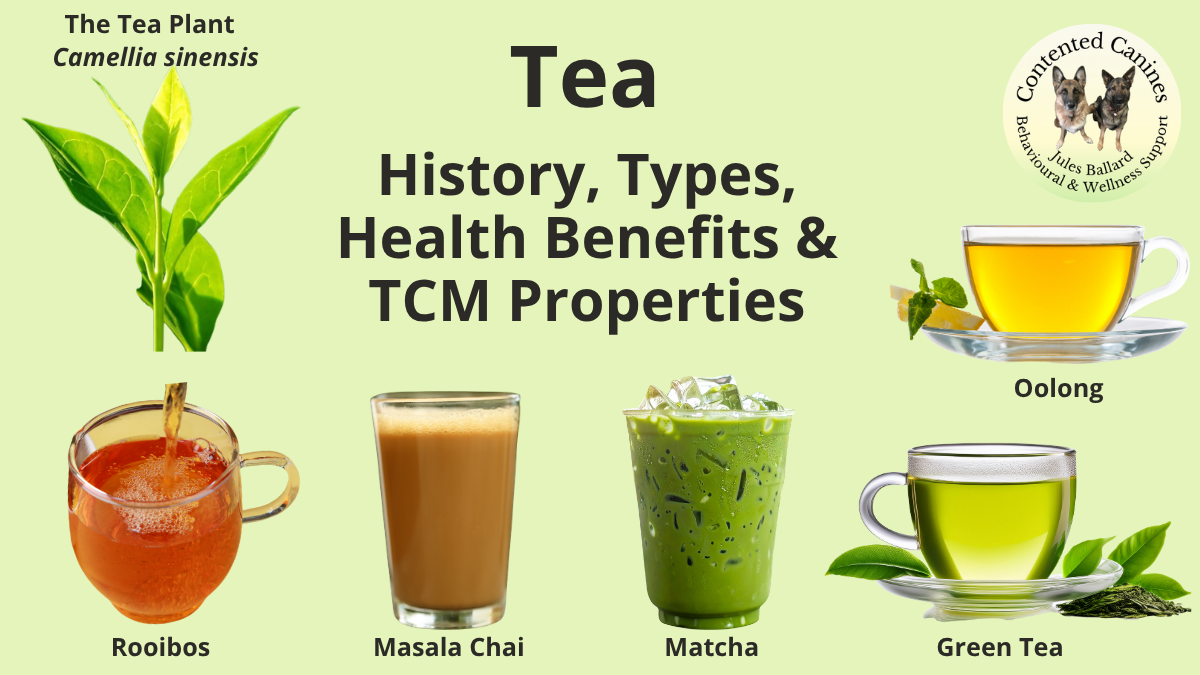
A brief history of how tea came to become the popular drink it is today, types of tea, health benefits and TCM properties.
The History of Tea
Emperor Shennong (神农), was one of the Three Sovereigns, who were mythological rulers and deities from ancient China circa 2852 to 2070 BCE. He was supposed to have been the son of a princess and a heavenly dragon. Though he is often depicted by artists in human form, according to legend he had the head of an ox and a human body. His name translates to divine farmer because he taught practices of agriculture, as well as the use of herbal drugs, which became the foundation of Traditional Chinese medicine.
The story begins in 2737 BCE when he discovered tea by accident when the tea leaves from twigs he was using for a fire rose up on a column of hot air and landed in the water. Being a keen herbalist he tasted the brew.
Tea was initially used for medicinal purposes as it was an antidote to over 70 poisons. It took a further 3000 years before it became widespread as a popular beverage in China during the Tang dynasty years of 618 to 907CE, particularly amongst royalty, court officials and Buddhist monks.
Lu Yu was a monk who left the monastery before he was ordained, to travel. He wrote the Tea Sutra in 760CE which detailed how to use tea and the emerging tea culture. He treated tea drinking as a ceremony.
Tea eventually spread to other parts of the world by Dutch traders arriving in Europe and Britain in the early 17th century.
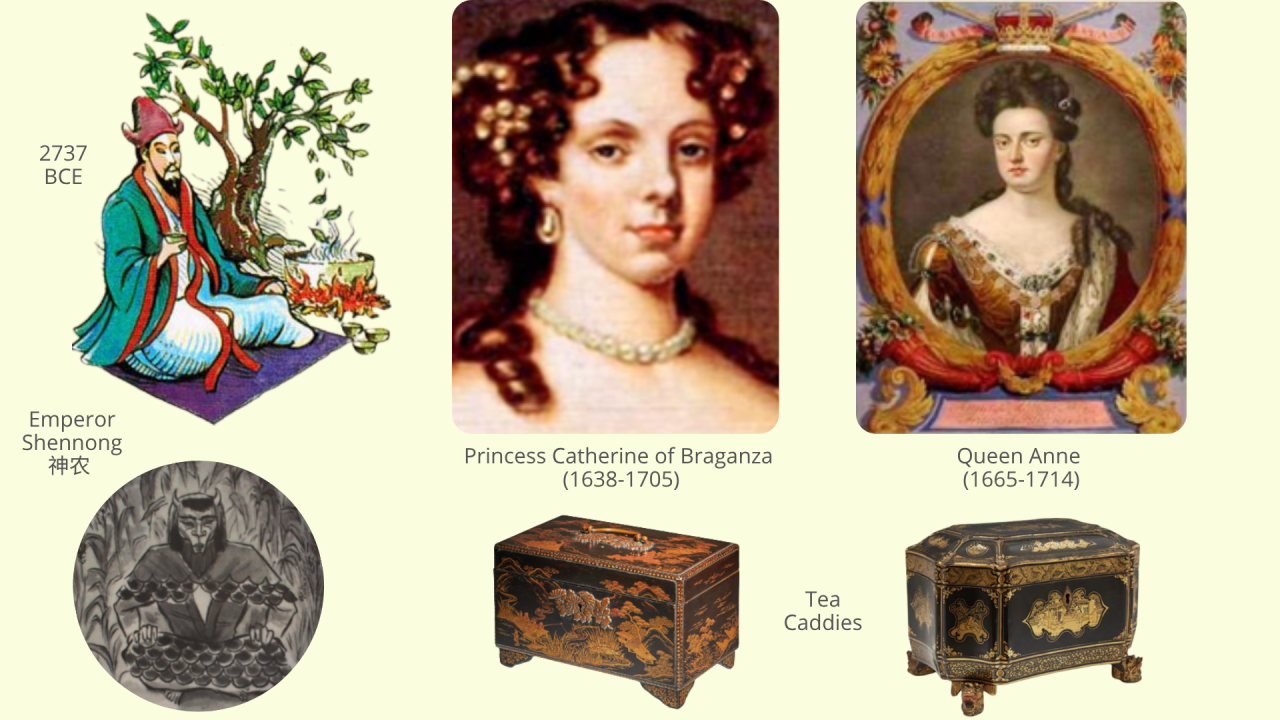
Princess Catherine of Braganza, Portugal married Charles II in 1662 and brought the tradition of drinking tea to England and it increased in popularity during the reign of Queen Anne as she chose tea over the traditional ale as her morning beverage and many followed her lead.
As tea became more popular it led to a reduction in tax revenue from alcohol so the govt decided to tax tea at 119% which made it only affordable legally for royalty and the upper classes. Tea was such a precious commodity it was locked into special boxes called caddies and only the lady of the house had the key. In the early 18th century, the only way the lower classes could afford to buy tea was on the black market. The Commutation Act of 1784 finally reduced the tax on tea to 12.5%, effectively ending the smuggling trade.
Tea in the Victorian Era
Tea saw another surge during the Victoria era. As lighting improved, dinner at court and amongst the upper classes began being served later at 8pm, so a snack was needed to fill the gap between lunch and dinner.
Anna Maria the seventh Duchess of Bedford and one of Queen Victoria‘s ladies in waiting from 1837-41 is credited with starting the tradition of the afternoon tea, as she asked for biscuits to be brought to her room in the afternoon with her cup of tea. She invited her friends and this grew into a fashionable social event which rapidly spread amongst the aristocracy.
Tea drinking for the wealthy came with many opulent accessories, fine porcelain teacups, decorative teapots, beautiful table linens and personalised tea blends. The afternoon tea table became a place to express your identity, interests and refinement.
Tea was also seen as the start of feminism. Women were banned from coffee houses, but afternoon tea allowed women to entertain mixed company at home, chat and express their opinions free from some of the Victorian era's strict restrictions. This freedom affected fashion with their 'tea' dresses using less boning to hold their shape and being made from light, flowing fabrics, liberating them from society's tight corsets.
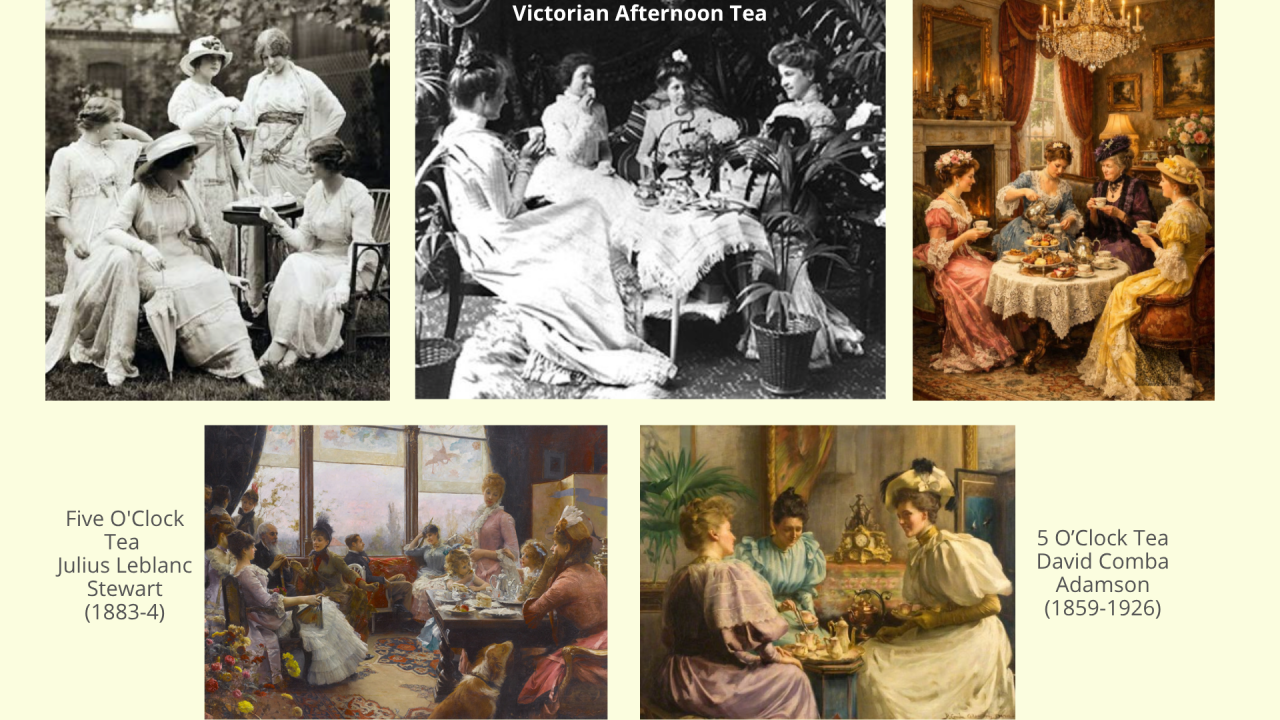
The afternoon tea inspired many artists of the day to record the event. I love the one on the bottom left with the dog looking longingly at the table. The paintings also record the fashions and accessories required like silver teapots and fancy porcelain. I think the Victorians would have been horrified by the teabag, which though invented in 1908 didn't really take off until the 1950's.
Though tea drinking was being enjoyed by all classes at this time the working classes did not partake of afternoon tea as they had their final meal earlier between 5-6pm, this was sometimes known as high tea because it was taken at a high table in the kitchen.
Types of Tea
All tea whatever its type comes from the tropical plant known as Camellia sinensis. The tea plant grows best in a warm climate with long sunlit days, cool nights and an abundance of rainfall. Tea plants grow at altitudes ranging from sea level to 7,000 feet and are indigenous to China, Tibet, and northern India, though they are cultivated in many other countries in Asia, Africa and South America. The most complex teas grow at higher altitudes and many bushes can be cultivated for over 100 years. Tea bushes cover about six million acres of the earth and are harvested every week during the almost year-long growing season.
The most common types of tea are:
Black tea
Green tea, which is the most popular variety in China.
Matcha, which is finely milled green tea and comes in a powder
White tea
Oolong tea
Puerh tea
What makes them different is how the leaves are processed after they’re harvested. The degree of oxidation and fermentation changes each tea’s colour, flavour, energetic temperature and therapeutic function. Black tea is 100% oxidised, Oolong 15-85%, White tea 5-10% and Green tea has no or minimal oxidisation.
The tea leaves are picked by hand and then withered by blowing hot air onto them. They are oxidised under controlled temperatures and humidity. Withering removes about 60 to 70% of leaf moisture over 12 to 18 hours so leaves can be rolled without shattering. Rolling is rarely done by hand now except for some speciality teas and is predominantly done by machines. Rolling is for 45 to 90 minutes which breaks down the cells, releases enzymes and oils, and sets how evenly oxidation develops. Hot-air firing near 100°C stops oxidation in place and dries the tea
In China, puerh is called black, or “dark” tea, while the western black tea is called red tea. Puerh is fermented after oxidisation. There are two types of puerh: Sheng and shou. Sheng is raw puerh which is aged naturally and allowed to delicately ferment overtime, it has a sweet, woody taste. Shou, or cooked puerh was developed in the 1980s as a way to speed up fermentation and involves piling the tea compactly to generate heat and cook the leaves.
Black Tea
The benefits associated with most teas come from polyphenols; antioxidants that offer protection from several chronic diseases. But black tea contains one group of polyphenols, called theaflavins, that no other type of tea has. Theaflavins develop during oxidation and account for 3% to 6% of the polyphenols in black tea. That’s why black tea offers some of the same benefits as other types of tea but also provides unique advantages.
Drinking just 2 cups of black tea a day lowers blood cholesterol, blood pressure and reduces the risk of heart disease by 8% (Li et al, 2017) and the risk of stroke by 16%. If taken without sugar or sweeteners it lowers blood sugar.
One study found that black tea decreases the risk of squamous cell carcinoma skin cancer. A review of 64 studies concluded that tea might help prevent oral cancer. Another study found that 3 cups a day had a positive effect on the gut microbiome (Tomioka et al 2023).
There are many types of black tea, usually named after the region they are from. The most well known are:
Assam (from NE India) strong and malty, amber in colour
Darjeeling (from West Bengal, India) sweet, fruity taste
Ceylon (from Sri Lanka) citrus flavour
Masala Chai flavoured with cinnamon, ginger, cardamom, fennel, and cloves
English Breakfast Tea. Its base is Keemun tea, but it is a blend of several teas
Lapsang Souchong which are mature leaves, smoke-dried over a pinewood fire. This was apparently Winston Churchill's favourite tea
Dian Hong (also known as Yunnan Red) and
Earl Grey which has an interesting back story
During a diplomatic mission to China, a British envoy heroically saved the life of a Chinese mandarin's son from drowning. As a token of thanks, a gift of tea was given, alongside the recipe to reproduce it. The envoy took the gift back to England and presented it to the then Prime Minister 2nd Earl Charles Grey (1764-1845). This new tea became so popular with Grey and his associates that in 1831 he asked Twinings to reproduce it and sell it on for others to enjoy. It gets its flavour from Bergamot oil.
Green Tea
Green tea has minimal oxidation which preserves its plant compounds. It contains catechins predominantly epigallocatechin gallate (EGCG) which is a metabolic regulator, helping insulin respond better to carbohydrates and activating AMPK which turns on processes that generate energy in the form of ATP and turns off processes that use energy when the cell is low on energy. EGCG is highest in green tea (7380 mg per 100 g), followed by white tea (4245 mg per 100 g) and in smaller quantities in black tea (936 mg per 100 g).
A 2018 review showed that excessive intake of EGCG >800mg may cause liver toxicity, however one cup of green tea only contains 70-165mg. EGCG can interfere with the metabolism of folate; a B vitamin essential for fetal growth and development. Therefore, you should not take EGCG supplements or drink green tea if you are pregnant.
Green tea contains L-theanine which increases alpha brain waves which are calming. It improves brain function and can prevent degenerative brain diseases, it helps with nerve cell regeneration and improves oxygen flow to the brain.
It contains the flavonoids kaempferol and quercetin which reduce the risk of chronic diseases and cancer and myricetin, which decreases blood sugar and cholesterol. It reduces inflammation, lowers blood pressure and reduces the risk of heart disease. It is an antioxidant and decreases DNA damage
Green tea shouldn't be taken at the same time as dairy as the milk protein casein binds to the beneficial polyphenols, so if you want to use milk, try plant based milks like soy, oat or almond. Green tea goes well with lemon or jasmine. Of note, all teas can inhibit the absorption of iron so should be drunk separately from meals.
Matcha Tea
Matcha is finely ground powder from shade grown green tea leaves. It is usually taken warm, but many people enjoy it over ice. Matcha tea has various health benefits, including an enhancing effect on cognitive function, cardio-metabolic health, and anti-tumour. To date, randomised clinical trials showed that matcha decreases stress, slightly enhances attention and memory, but has no effect on mood. It contains 3 x the amount of EGCG of green tea. Consuming matcha with a high-fat diet resulted in decreased weight gain and food intake, improved serum glucose and lipid profile, reduced inflammatory cytokines and reduced oxidative stress. It is a source of omega-3s. However, some people can be allergic to Matcha.
Caffeine
Caffeine is often one of the first things that come to mind when you think about tea and coffee and many people switch to tea, rather than coffee to lower their caffeine intake. And though caffeine often gets a bad rap, it has its own health benefits in the right amounts. It lowers your risk of heart failure, stroke, colon cancer, Parkinson's, Alzheimer's, boosts your mood, raises your energy levels, improves physical and mental performance, aids glucose metabolism and enhances pain relief.
The recommended amounts of daily caffeine are under 400mg for adults, under 200mg for pregnant women and under 100mg for adolescents. Different types of tea have varying amounts of caffeine.
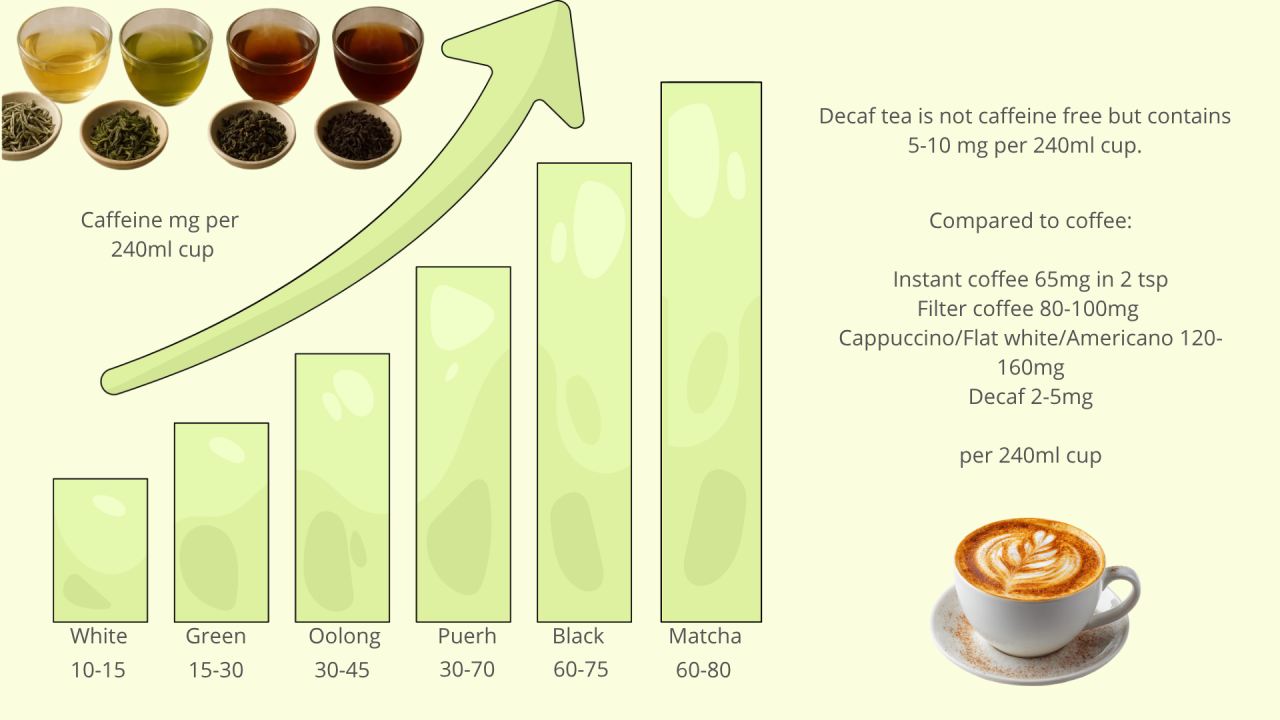
L-theanine which is present in tea, but not coffee can counteract the effects of caffeine.
Too much caffeine can cause anxiety, irritability, agitation and jitteriness, insomnia, nausea, diarrhoea, dizziness, heart palpitations, heartburn and an increase in blood pressure. A caffeine overdose can cause heart arrhythmias, seizures and even death. Some people are extremely sensitive to even small amounts of caffeine.
In TCM caffeine moves Qi upwards and outwards. Any TCM pattern that has excessive heat like Liver Yang Rising or those suffering with anxiety or insomnia may benefit from reducing high-caffeine teas, particularly later in the day.
Traditional Chinese Medicine and Tea
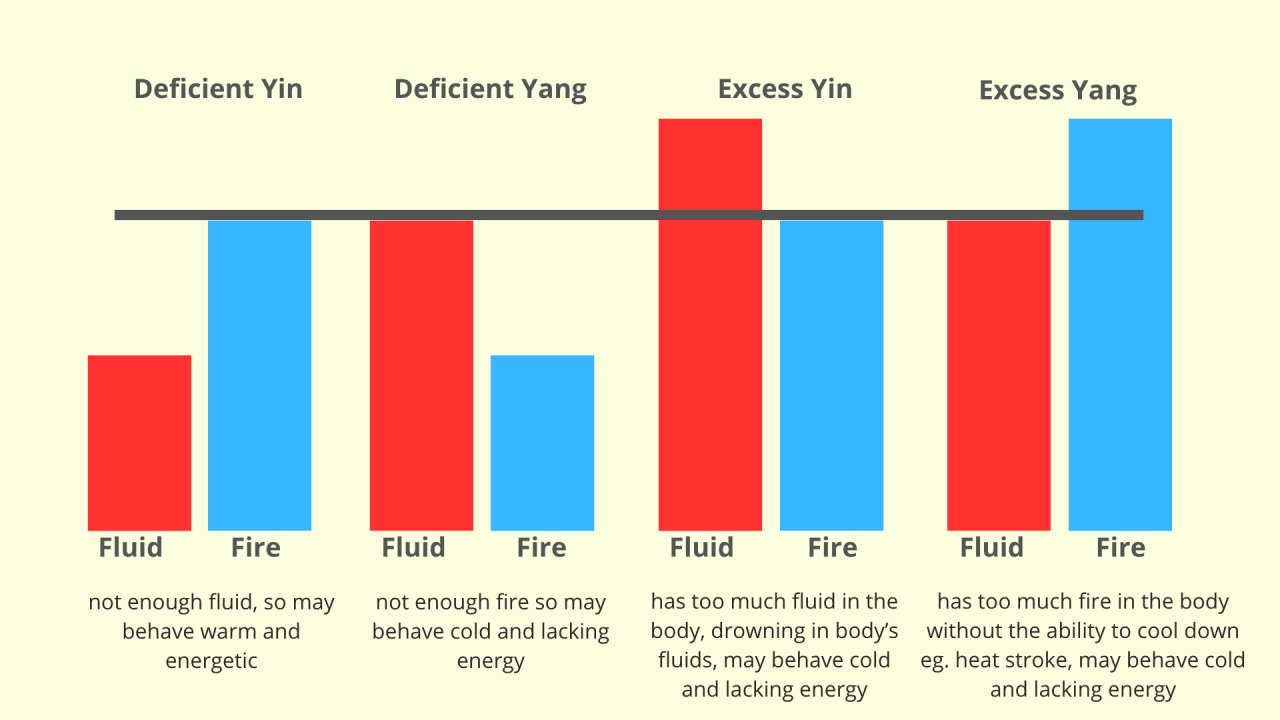
Cold and hot in TCM are energetic terms, rather than temperature. In Yin deficiency there is too much heat in the body and not enough fluid and in Yang deficiency there is too much fluid and too much cold. The Chinese flavours of salty, sweet, bitter, spicy/pungent and sour also have therapeutic properties. Bitter is the flavour of the Fire element. It drains downward, dries, and guides energy to the Heart so it isn't surprising the effects that the slightly bitter green teas can have.
Green Tea is cooling and can be used to clear Heat, cool the Liver, promote and support digestion and dry Dampness. Green tea helps those with excess Heat patterns; Liver Fire, irritability, Yin deficiency or internal Heat. However, because of its cooling nature, it isn’t ideal for patients with Yang deficiency, Spleen Qi deficiency, cold digestion, or significant fatigue.
White Tea is cool, but it is milder and sweeter than green tea which will, nourish Yin, clear Heat, cool the body
Black Tea is warm which is good for those who tend to feel cold or sluggish. It tonifies Yang, helping Yang deficiency, warms the Stomach, tonifies the Heart and promotes healthy digestion.
Masala Chai is warming. It is black tea with added cinnamon, ginger, cloves, and cardamom. It warms the Middle Jiao (one of the Triple Heaters), supports Yang, improves circulation and eases cold digestion
Oolong Tea is neutral to slightly warm which moves Stagnation particularly Liver Qi stagnation and people who feel emotionally stuck, it resolves Phlegm which in TCM can be lumps, tumours, cysts, migraine, chronic coughing and heart and digestive issues and it supports digestion
Puerh Tea strengthens the Spleen, resolves Dampness, improves digestion and clears mental fog. The longer it ages, the warmer and more grounding it becomes.
Matcha is cold which clears Heat, soothes the Liver and improves mental focus.
Tea and TCM Patterns
In TCM, disease has many diagnostic patterns of which one of the most common is Spleen Qi deficiency. Tea can be matched to certain patterns to help resolve issues. Spleen Yang Deficiency (which is a type of Spleen Qi deficiency) and Cold Damp Patterns can benefit from ginger tea, Masala Chai and Rooibos.
Ginger Tea's warming, pungent nature makes it ideal for digestive issues, nausea, morning sickness and easing common cold symptoms.
Rooibos, also known as red tea or red bush tea, grows in South Africa and is made from Aspalathus Linearis leaves. It’s caffeine-free and energetically mildly warming.
Spleen Yang deficiency can show up as:
- Poor appetite
- Slight abdominal distension after eating
- Tiredness
- Lassitude
- A desire to lie down curled up
- Pale
- Weakness of the limbs
- Loose stools
- Tendency to obesity
- Feeling cold, cold limbs
- Oedema (swelling)
- Pale wet tongue
Liver Qi Stagnation can benefit from Oolong tea and
mint tea. Liver Qi Stagnation can show up as:
- Pains in the side of the body which are eased by movement
- Feeling bloated
- Sighing
- Frustrated, snappy, depressed, moodiness
- Lump in the throat
- Irregular periods, PMS, irritability
Liver Qi Stagnation can turn to Liver Heat which increases the feeling of heat, with a red face, thirst, and a propensity to outbursts of anger.
Heat Patterns benefit from Green tea, White tea, chrysanthemum (tea which is made from the flowers) and peppermint. Chrysanthemum clears Liver Heat, calms Liver Yang Rising, benefits the eyes and supports healthy blood pressure. People may swap between mint and peppermint thinking they are the same, but they’re quite different energetically. Mint is gently cooling and helps: Move Liver Qi, clears mild Heat, harmonises the Stomach, relieves indigestion, bloating, gas, nausea and vomiting. Peppermint is stronger and colder than mint and can also be used to clear Wind Heat, ease sore throat, headaches, depression, indigestion, bloating, gas, nausea and vomiting and move stagnant Liver Qi.
Liver Fire or Damp Heat can benefit from Dandelion tea (which is made from the leaves). Dandelion tea is cold energetically. The entire plant can be used for its therapeutic properties. It clears Heat and Wind Heat, drains Damp Heat, supports the Liver and Gallbladder, detoxifies, reduces inflammation and lowers blood sugar. It should be used with caution by diabetics. It can interact with diuretics, lithium, blood pressure medications and antibiotics.
For Dampness and Mental Fog try Puerh tea.
Liver and Kidney Yin Deficiency can show up as:
- Dizziness, ear issues
- Lower backache, headache, insomnia
- Numbness or tingling of limbs
- Dry eyes, blurred vision, dry throat, dry hair and skin, brittle nails
- Night sweating, dry stools, nocturnal emissions
- Menstrual issues, infertility
- Tongue without coating
Goji berry tea nourishes Liver and Kidney Yin
and benefits the eyes. Goji berry and chrysanthemum tea are a great combination.
Digestive issues can benefit Rooibos, licorice root, ginger or Genmaicha.
Licorice Root is neutral and sweet. It tonifies Spleen Qi, harmonises TCM herbal formulas and supports digestion. It shouldn't be taken if you have high blood pressure or taking statins.
Genmaicha originates from Japan and combines green tea with roasted rice. The rice softens green tea’s cooling nature, making it easier on the digestion. It has a smooth nutty flavour. It helps to harmonise the Middle Jiao which is on of the triple heaters, strengthen the Spleen and support digestion without excessive cooling.
Chamomile is soothing, easing stress and anxiety, it promotes sleep and boosts the immune system. It is popular with both humans and animals.
Herbal Tea Infusions
Herbal teas aren’t technically teas at all. They’re infusions made from herbs, flowers, fruits, berries, roots or spices and naturally contain no caffeine. A herbal infusion can be made by steeping your chosen herb in boiling water. The length of time varies depending on the plant part being used. You will need a teaspoon of herb, boiling water and a clean glass jar with a lid.
While making the infusion, be sure to keep the jar covered at all times to contain the steam. The heat that's trapped inside is crucial to releasing the beneficial compounds in the herbs.
- Place the herbs in a glass container.
- Pour boiling water over the herbs so they are completely covered.
- Seal the jar with a tight-fitting lid to keep the steam and volatile oils from escaping.
- Allow the infusion to steep for 30 mins for seeds or fresh berries, 2 hours for flowers, 4 hours for leaves and 8 hours for roots and barks.
- Strain the herbs out of the water using cheesecloth or a fine-mesh strainer. Repeat if necessary to remove all of the herbs.
- Store in the fridge for up to 48 hours.
Tea has inspired some great quotes:
“A woman is like a teabag, you never know how strong it is until it gets in hot water” - Eleanor Roosevelt - America's 1st lady from 1933-1945
“Tea is the only simple pleasure left to us” - Oscar Wilde - author
“Happiness is a cup of tea and a good book” - C.S.Lewis - author
“There are few hours in life more agreeable than the hour dedicated to the ceremony known as afternoon tea” - Henry James - author
“Where there’s tea, there’s hope” - Arthur Wing Pinero - playwright
“If you are cold, tea will warm you; if you are too heated, it will cool you; if you are depressed, it will cheer you; if you are excited, it will calm you” - William Gladstone - Victorian Prime Minister
Lady Nancy Astor who was the first female member of parliament apparently once said to Winston Churchill, "If you were my husband, I'd poison your tea" to which Churchill replied, "Madam, if I were your husband, I'd drink it"
Jules Ballard - Author of Holistic Help For Your Anxious Dog https://www.amazon.co.uk/Holistic-Help-Your-Anxious-Dog/dp/B0H6BX4M7N/
References
Li X, Yu C, Guo Y, Bian Z, Si J, Yang L, Chen Y, Ren X, Jiang G, Chen J, Chen Z, Lv J, Li L; China Kadoorie Biobank Collaborative Group. Tea consumption and risk of ischaemic heart disease. Heart. 2017 May;103(10):783-789.
Lin Y, Shi D, Su B, et al. The effect of green tea supplementation on obesity: A systematic review and dose–response meta-analysis of randomized controlled trials. Phytotherapy Research. 2020; 34: 2459–2470.
Sokary S, Al-Asmakh M, Zakaria Z, Bawadi H. The therapeutic potential of matcha tea: A critical review on human and animal studies. Curr Res Food Sci. 2022 Nov 23;6:100396.
Tomioka R, Tanaka Y, Suzuki M, Ebihara S. The Effects of Black Tea Consumption on Intestinal Microflora-A Randomized Single-Blind Parallel-Group, Placebo-Controlled Study. J Nutr Sci Vitaminol (Tokyo). 2023;69(5):326-339.
Zhang Y, Yang H, Li S, Li WD, Wang Y. Consumption of coffee and tea and risk of developing stroke, dementia, and poststroke dementia: A cohort study in the UK Biobank. PLoS Med. 2021 Nov 16;18(11)
Holistic Haven Circle Membership - Wellness for people and Paws - A community for ongoing holistic support, learning and connection https://holistichaven.newzenle...
Categories: : Health