The Lotus - The Symbol Behind Holistic Haven Circle
 Jules Ballard
All about the Lotus; its symbolism and uses
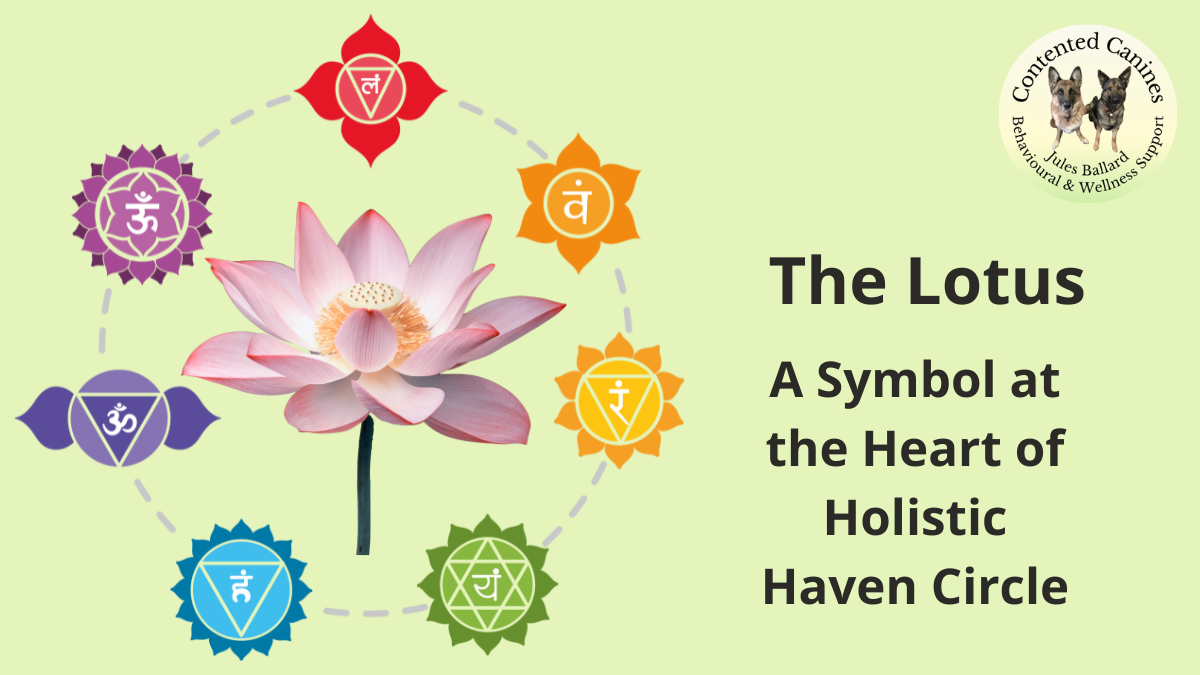
The Lotus: A Symbol at the Heart of Holistic Haven Circle
In our Holistic Haven Circle Membership, the lotus flower (Nelumbo nucifera) isn’t just a pretty logo; it’s a quiet teacher, a reminder and a companion on the path toward deeper wellness for both people and their beloved companion animals.
Across cultures and centuries, the lotus has represented longevity, purity, rebirth, enlightenment, spiritual awakening, and divine beauty. It appears in Hinduism, Buddhism, Jainism, Ismailism and throughout Chinese culture as a sacred symbol, and it holds the honour of being the national flower of both India and Vietnam. Not bad for a plant that spends its life rooted in mud.
And perhaps that’s why so many of us feel drawn to it; it shows us that beauty and clarity can rise from murky waters, and that transformation isn’t just possible… it’s natural.
There are only 2 types of true lotus; Nelumbo nucifera which is Indian or sacred lotus and Nelumbo lutea which is American lotus or yellow lotus.
The lotus is often mistaken for the water lily, but this is a different plant, latin name Nymphaea. To add to the confusion Nymphaea caerulea is known as the Egyptian blue lotus and Nymphaea lotus is known as the white sacred lotus of Egypt.
What is the difference between the lotus and the water lily
Water lilies usually float above the surface of the water. Lotuses submerge their roots in mud at the bottom of the water, and their stems, leaves and flowers emerge from beneath the water. Lotuses are larger than water lilies.
Water lilies have a greater colour range than lotuses. Lotuses are usually white or pink (but may also be red or yellow), and water lilies can be white, pink, red, yellow, orange, purple and blue.
A Plant of Patience and Perseverance
Lotus plants grow in slow-moving rivers and ponds, sending down long strands that release thousands of seeds. Some sprout immediately, some feed passing wildlife, and some settle into the earth for decades, before finally waking up. The oldest recorded lotus germination found in a dried lakebed in northeastern China was from a 1,300 year old seed.
Today the lotus is cultivated for both its stunning presence in water gardens and its incredibly nourishing edible parts.
Lotus leaves are able to repel water and are large enough to be used as umbrellas.
The Lotus as Food
Every part of the lotus is edible, talk about being helpful from root to blossom!
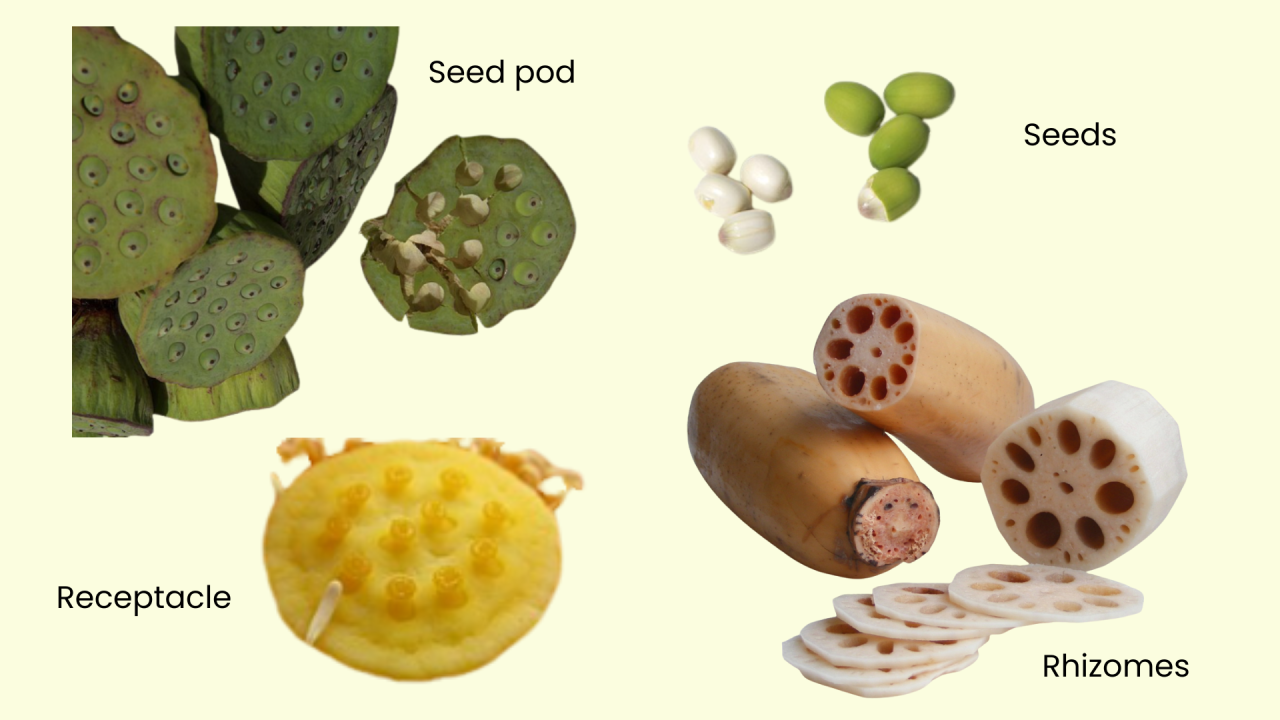
Rhizomes
These can grow up to 60 cm long and have a crisp, refreshing crunch. They’re commonly stir-fried, deep-fried, stuffed with meats or preserved fruits, or dried to make flour.
Roots
The outside is smooth and brown, the inside snowy white, and they’re naturally rich in Vitamin C.
A quick detour: Root vs Rhizome; what’s the difference?
A root anchors the plant, grows vertically downward, and transport nutrients and moisture up into the plant. A rhizome is a horizontal underground stem that stores energy, complete with buds and nodes that sprout new growth. They can be used to propagate a plant by dividing them. Think of roots as the plant’s support system and rhizomes as its strategic long-term planners.
Lotus tea, seeds, stems, leaves and beyond
Lotus roots, stamens and flowers can be made into tea with the root tea being popular in Korea and the stamen tea in China and Vietnam.
Lotus seeds are used in cakes and made into noodles. Lotus seeds are surprisingly large at 1.2-1.8cm long, high in protein, essential amino acids, fatty acids, fibre, vitamins B1, B2, B6, C and E, calcium, iron, zinc, phosphorus and copper.
Lotus stems are used in salads, soups and curries and can grow up to 4 feet in length.
The leaves can be used as packets to wrap around rice (like vine leaves are used in Greek dishes)
Though the petals, leaves and rhizome can be eaten raw, it is recommended to cook them as there is a risk of parasite transmission
The Lotus as Medicine
Across traditional medicine systems, the lotus is valued not just as food, but as a healing plant with a wide range of actions:
- Diuretic
- Antiviral support
- Hepatoprotective
- Hypoglycaemic
- Antioxidant and anti-wrinkle properties
- Lowers blood pressure and cholesterol
- Boosts Immune system
- Breaks down gallstones
- Sleep support for insomnia
- Supports weight loss
- Astringent
- Anti-inflammatory actions (when fermented)
- Boost brain function by encouraging formation of new neural pathways
Animal studies suggest digestive support, protection against stomach ulcers, and reduced inflammatory markers.
Note: Because of the hypoglycaemic effect, lotus should be used with caution by those with diabetes, and avoided in pregnancy due to limited research.
Leaves
Lotus leaves support cardiovascular health through their antioxidant and anti-inflammatory actions. The leaves contain the flavonol miquelianin, and alkaloids coclaurine, and norcoclaurine, and the whole plants contains bioactive compounds such as nuciferine and neferine. Neferine has successfully treated oesophageal, gastric, liver, lung, throat and tongue cancers and retinoblastomas.
Flowers & Stamens
Research suggests lotus flowers have a cytotoxic effect on cervical cancer cells and the stamens on colon cancer.
Chinese Herbal Medicine
In TCM all of the plant is used.
Lian Zi (seeds) are used for:
- Spleen Qi deficiency with diarrhoea
- Strengthen the Kidney
- Incontinence
- Excessive vaginal discharge (leucorrhoea)
- Sexual dysfunction in men
- Binds Jing (Essence)
- Calm the Heart and soothe the spirit (for anxiety, agitation, insomnia, palpitations)
Lian Zi Xin (seed embryo or plumule) is used to:
- Tonify the Heart and cardiovascular system
- Clear Heat,
- Calm the Shen
- Ease anxiety, insomnia, restlessness and palpitations
He Ye (leaf) is used to:
- Build Blood
- Regulates Menstruation
- Helps infertility
- Tonify the Lungs and treat respiratory disorders
- Clear Summer Heat (excessive sweating, dehydration and lack of urination)
Lian Feng (receptacle)
He Ye Di (leaf calyxes) and Lian Xu (stamens)
- Benefits the Heart and Kidney
- Stops excessive vaginal discharge (leucorrhoea)
- Eases frequent urination
He Geng (stems)
Ou Jie (roots) are used to
- Nourish Blood
- Stop bleeding
- Relieve Blood Stagnation
- Benefit the Liver, Lungs, and Stomach
Spiritual & Religious Significance
The lotus is deeply woven into spiritual iconography.
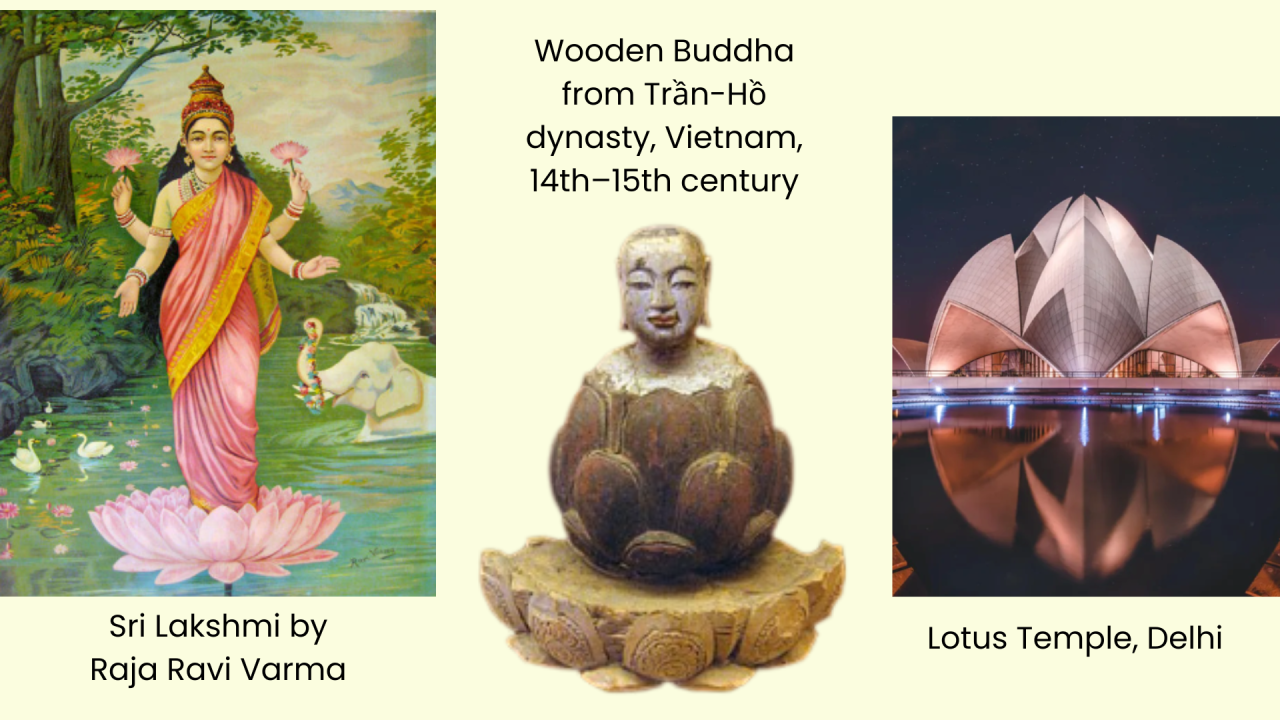
In Hindu tradition, the Goddess Lakshmi, embodiment of abundance, beauty, and prosperity is depicted seated or standing upon a lotus, holding blossoms in her hands. Vishnu, her consort, also carries a lotus as a sign of divine purity.
The lotus symbolises the soul’s journey from darkness to light. We can stay nestled in the mud of old patterns and comfort zones… or rise through challenge toward clarity, integrity, and spiritual growth to lead a prosperous, peaceful, happy life. (Luckily, no one’s judging your pace; even lotus seeds take years if needed)!
In South Asian Ismaili literature, the lotus represents the pure soul, and its shape has influenced architecture for centuries in domes, pillars, arches, temple carvings all echoing its elegant form.
The Lotus in Chakra Symbolism
The lotus appears in every symbol of the seven major chakras, each petal count representing qualities or lessons:
- Root Chakra — 4-petalled lotus, a square and a downward-facing triangle representing the 4 aspects of the human mind.
- Sacral Chakra — 6-petalled lotus, multiple circles and a crescent moon representing the cyclical nature of life, death, rebirth and female energy, while the 6 petals portray the 6 negative emotions of anger, jealousy, cruelty, hatred, pride, and desire that we need to overcome to open this chakra.
- Solar Plexus Chakra — 10-petalled lotus
representing the ten pranas of vital energy that govern the body with a downward-pointing triangle symbolising the fire element and a circle symbolising the cyclical nature of energy and transformation.
Heart Chakra — 12-petalled lotus representing the 12 divine qualities associated with the heart such as love, peace, understanding, empathy, and harmony and two triangles that intersect symbolising the union of masculine and feminine energies, as well as the balance between earthly and spiritual matters.
- Throat Chakra — 16-petalled lotus srepresenting the 16 vowel sounds of Sanskrit which are the building blocks of all mantras and speech. They surround an inverted triangle which holds a circle within, representing wholeness and perfection of expression.
- Third Eye Chakra — 2-petalled lotus representing the dual energy channels and the integration of opposites and an inverted triangle resting in a circle signifying wisdom and emphasizing this chakra’s role in our journey to spiritual awareness.
- Crown Chakra — the 1000-petalled lotus symbolises the infinite nature of spiritual enlightenment and the connection to universal consciousness surrounding a circle symbolising unity, wholeness, and the interconnectedness of all beings.
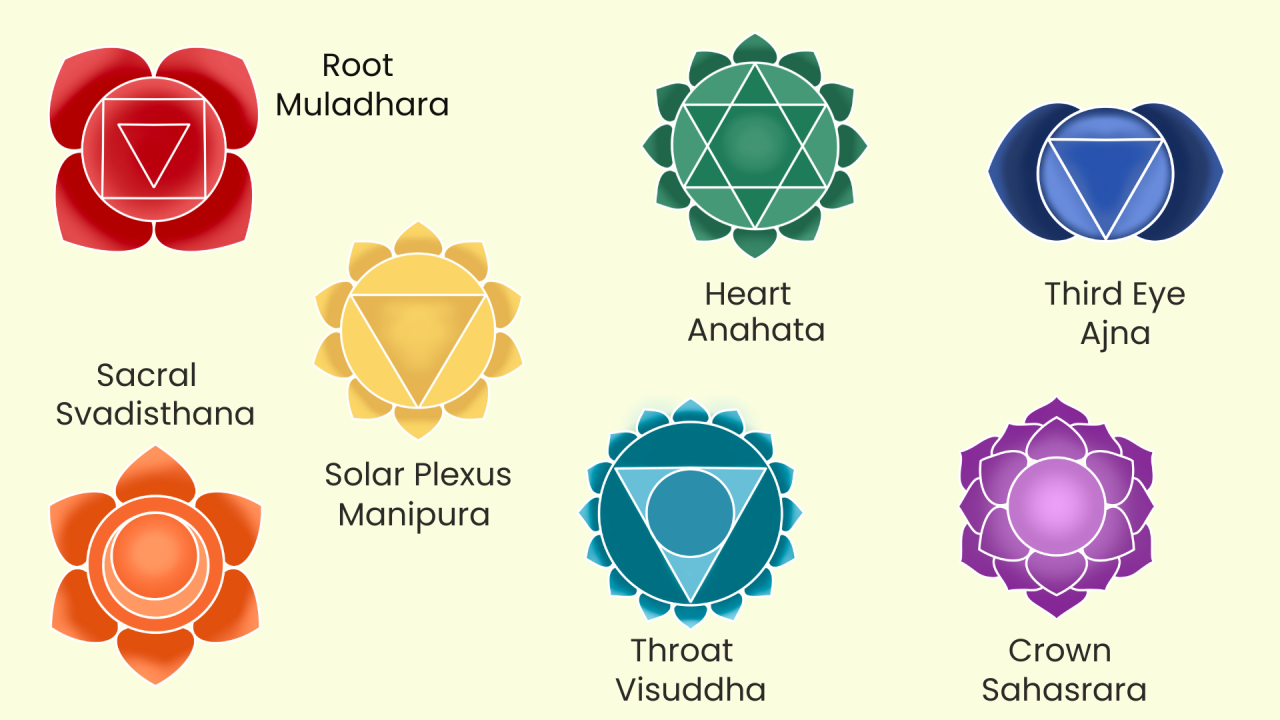
From grounding to liberation, the lotus guides the journey upward.
Why the Lotus Belongs at the Heart of Holistic Haven Circle
The lotus embodies everything we stand for here:
Growth. Healing. Transformation. Beauty emerging from challenge and a powerhouse of nourishment and healing.
The reminder that even when life feels muddy, something extraordinary is quietly forming beneath the surface.
Just like our community, it bridges the wisdom of the natural world with the inner landscape of spirit, wellbeing, and wholeness.
And perhaps most importantly, it whispers:
Keep rising. There is light waiting for you.
Want to learn more
Jules Ballard - Author of Holistic Help For Your Anxious Dog https://www.amazon.co.uk/Holistic-Help-Your-Anxious-Dog/dp/B0H6BX4M7N/
Holistic Haven Circle Membership - Wellness for people and Paws - A community for ongoing holistic support, learning and connection https://holistichaven.newzenle...
Categories: : Botanical Spotlight