The Human-Canine Bond: A Love Story Woven Through Time
 Jules Ballard
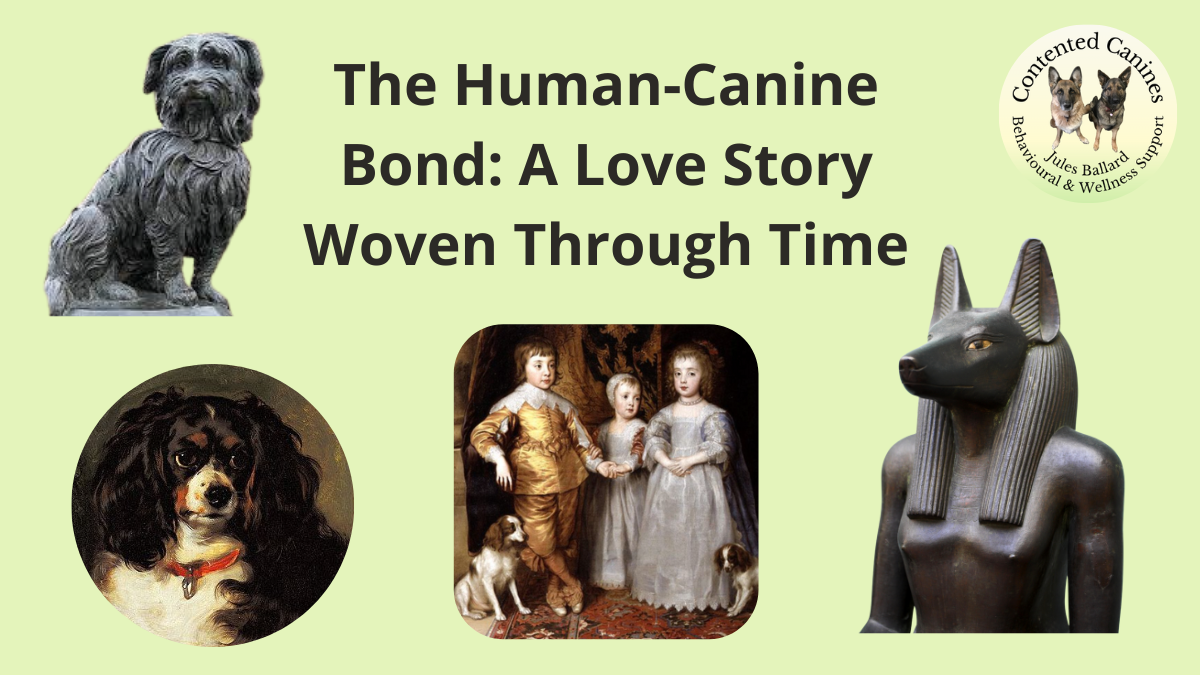
Looking at the Human-Canine bond throughout history
The Human-Canine Bond: A Love Story Woven Through Time
Dogs and humans have been tangled up in each other’s lives for far longer than written history; emotionally, practically, and sometimes in ways that make you wonder who domesticated whom. This blog takes a wander through that ancient partnership, exploring how the human-canine bond has shaped cultures, survival, and the softer corners of our hearts.
From the moment early humans first welcomed wolves to the fire, the connection has been powerful. Fossil evidence from Africa suggests that Homo habilis lived alongside early dogs, while joint human and dog burials in China dating back 15,000 years hint at a relationship far deeper than simple utility. England offers dog fossils from 17,000–7,000 years ago, and cave art from around 8,000 years ago lovingly records scenes of hunters and their dogs working together.
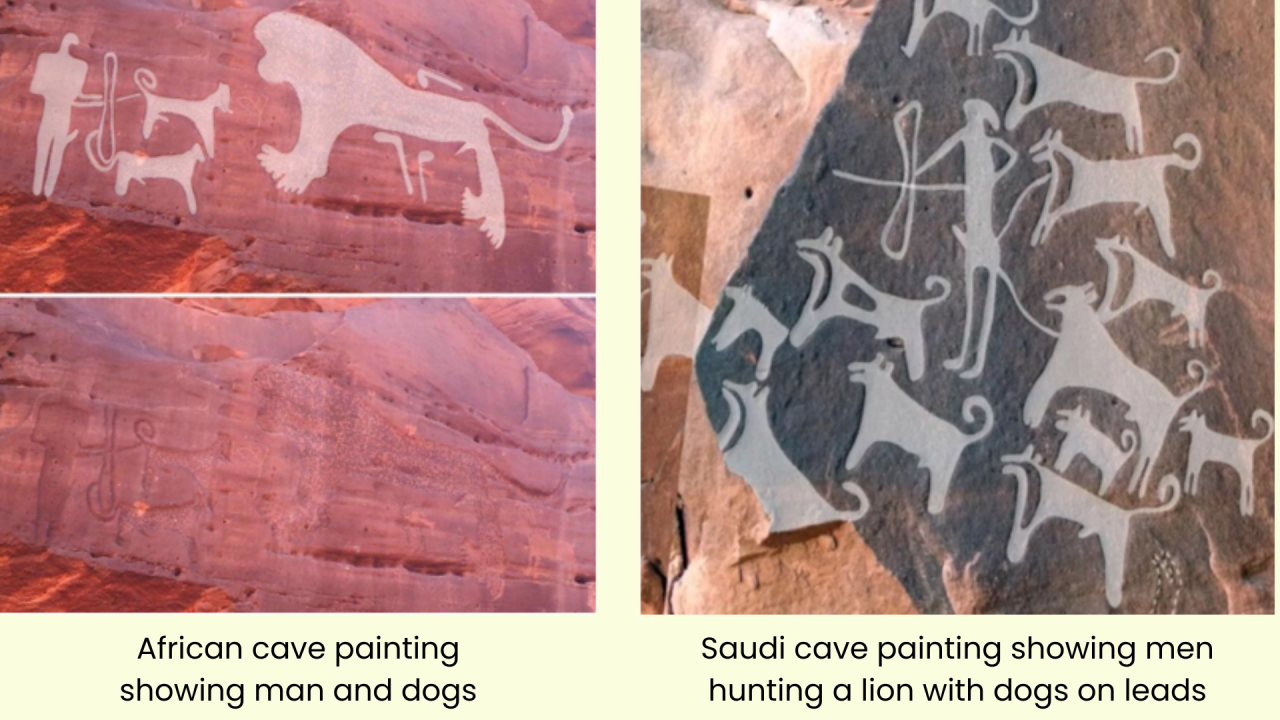
Early humans quickly learned that life was better with paws. Dogs could run faster, track better, and bite harder than we could, making them invaluable hunting partners. They also served as early alarm systems, loyally sounding the ‘incoming’! long before Ring doorbells existed.
The bond wasn’t just practical, it was honoured. The Roman emperor Hadrian commissioned grand tombstones for his dogs, and the Egyptians revered them so highly that Anubis, guardian of the underworld, was often depicted as a dog or a man with a dog’s head and Egyptian royalty trusted dogs as protectors. Ancient writers noticed the depth of attachment too. Herodotus recorded that those who mistreated dogs were punished, and dogs were sometimes valued more highly than slaves. Throughout Greek and Roman history, dogs appear again and again as symbols of loyalty in families where family loyalty was… let’s say, occasionally optional.
A thousand years ago in China, Emperor Ling took devotion to a new level by appointing his dogs as senior court officials, complete with ranks. Later dynasties continued the tradition, accept the Ming rulers, who were decidedly Team Cat until the Manchurian dynasty switched things back in the 17th century.
In other parts of the world, the bond took on life-or-death meaning. Charles Darwin noted that the people of Tierra del Fuego valued their dogs so deeply that, in times of famine, they prioritised feeding them over vulnerable members of the tribe. Harsh through a modern lens, but a stark reminder of how essential dogs were to survival.
By the Middle Ages, dogs were powering spit roasters, butter churns and cider presses, albeit not all at the same time! They were also fighting alongside humans in battle. Henry VIII kept a specialised force of 400 soldiers solely to care for his war dogs. Even in the American West, dogs remained steadfast; General Custer’s letters reveal his deep attachment to his dogs during his final campaigns.
Yet affection for our companion animals hasn’t always been seen in such a rosy light. George Orwell blamed Britain’s falling birth rate in 1947 on the nation’s ‘obsession with animals’. In the 16th and 17th centuries, ordinary people risked accusations of witchcraft for loving their dogs too openly, companion animal ownership could literally be listed in court records as ‘evidence of diabolical activity’.
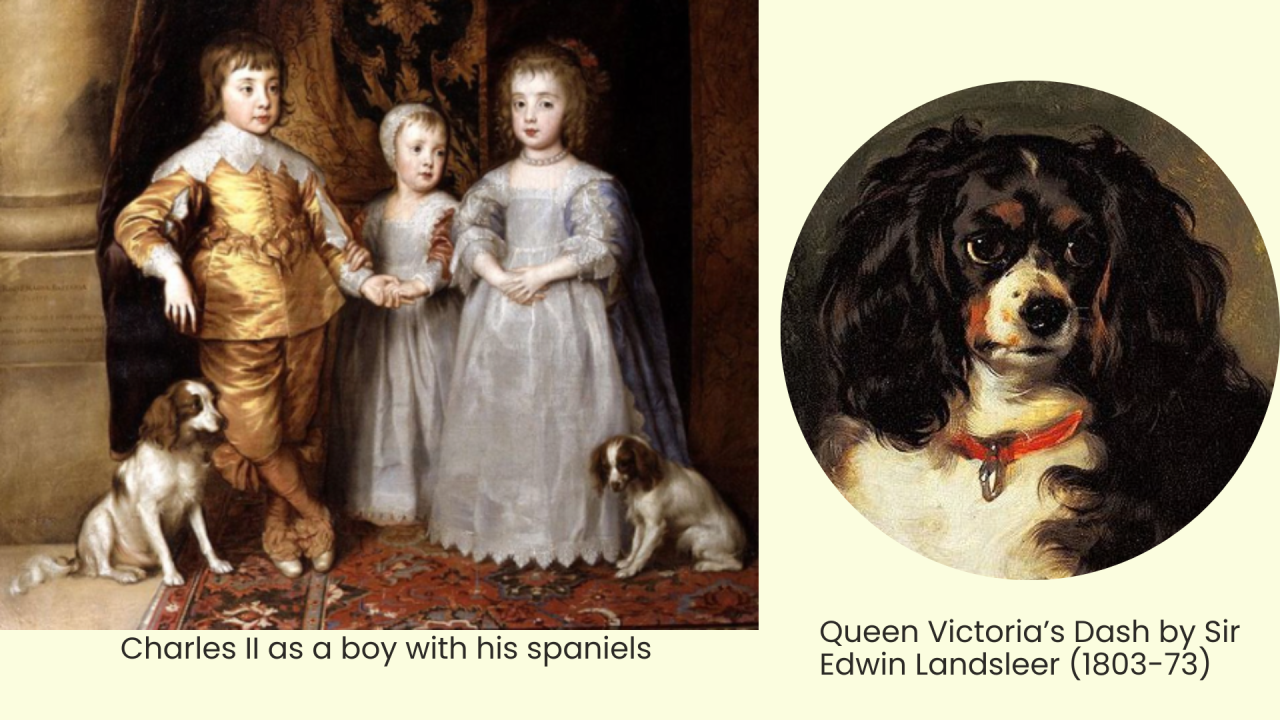
For centuries, dogs were most visibly cherished by royalty, aristocrats, explorers and military leaders, those whose stories were recorded. Mary, Queen of Scots’ beloved toy spaniel stayed hidden in her skirts during her execution. Charles II adored his little spaniels so much that they eventually bore his name. Queen Victoria’s dog, Dash, accompanied her everywhere in the early years of her reign.
Sometimes, a dog becomes a legend for loyalty alone. Greyfriars Bobby, the terrier who kept vigil at his guardian’s grave for 14 years, in the 1870’s, remains immortalised in an Edinburgh statue today.
In more modern history, the bond has shown itself in extraordinary ways. During natural disasters such as Hurricane Katrina in 2005, many people refused evacuation unless their dogs could come with them, risking their own lives rather than abandon them. This led to the Pets Evacuation and Transportation Standards Act of 2006. Even so, during Hurricane Ike, many guardians still made the same impossible choice. Surveys reflect this devotion too. A 2004 American study found that 56% of dog guardians were “very likely” to risk their own lives for their pets. And when forced to choose a single companion for a deserted island, 40% picked their dog.
The history behind the human-canine bond is fascinating and that early bond wasn’t built on dominance or control it was built on proximity, warmth and shared safety. Loyalty is not trained, it’s felt. Dogs bond most deeply with those whose presence feels safe, consistent and emotionally honest. When we regulate ourselves, communicate clearly, and honour our relationship, behaviour shifts without force, because their nervous system is wired to co-regulate with us. Thousands of years of co-evolution have shaped a relationship that is far more than ownership. It’s shared nervous systems, shared stories, shared healing.
Your dog isn’t looking for perfection. They’re looking for:
- attunement
- emotional clarity
- enriched outlets
- respectful communication
- and a calm, grounded human to share the world with
Exactly what our earliest ancestors offered each other at the fire.
Jules Ballard - Author of Holistic Help For Your Anxious Dog https://www.amazon.co.uk/Holistic-Help-Your-Anxious-Dog/dp/B0H6BX4M7N/
Holistic Haven Circle Membership - Wellness for people and Paws - A community for ongoing holistic support, learning and connection https://holistichaven.newzenle...
Categories: : Human Canine Bond